Launch offer — valid today only

📄 Digital book in PDF · read it on your phone or print it

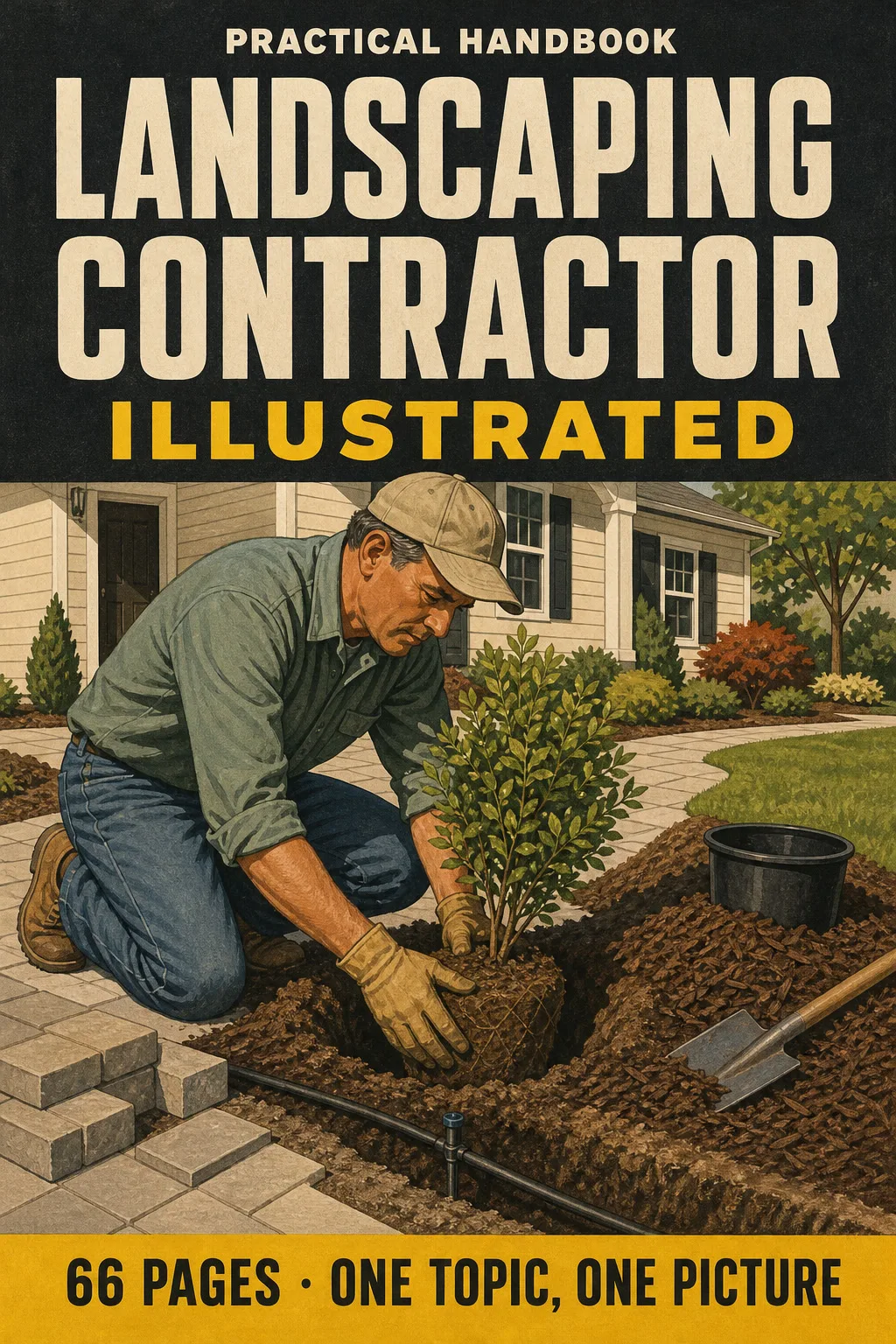
The C-27 Landscaping Exam, in Drawings The Whole Trade in the Order You Build a Job

Grading and drainage, soils, planting, irrigation and backflow, turf, pavers and retaining walls, low-voltage lighting, erosion control and estimating. Every topic gets its own page: the drawing first, then what you need to remember. 66 illustrated pages.

START STUDYING THIS WAY

🔒 Secure checkout · PDF by email · 30-day guarantee

Every topic, its own pageEach slope, valve and paver base drawn, with the explanation right beside it
66 illustrated pages9 parts, from Call 811 Before You Dig to the Exam-Week Checklist
Up-to-date sourcesCSLB C-27 study guide, IRC, MWELO and OSHA Subpart P
PDF by emailFormat

Look Inside the Book

Every page has one big drawing and a box with the numbers and steps you need to know:

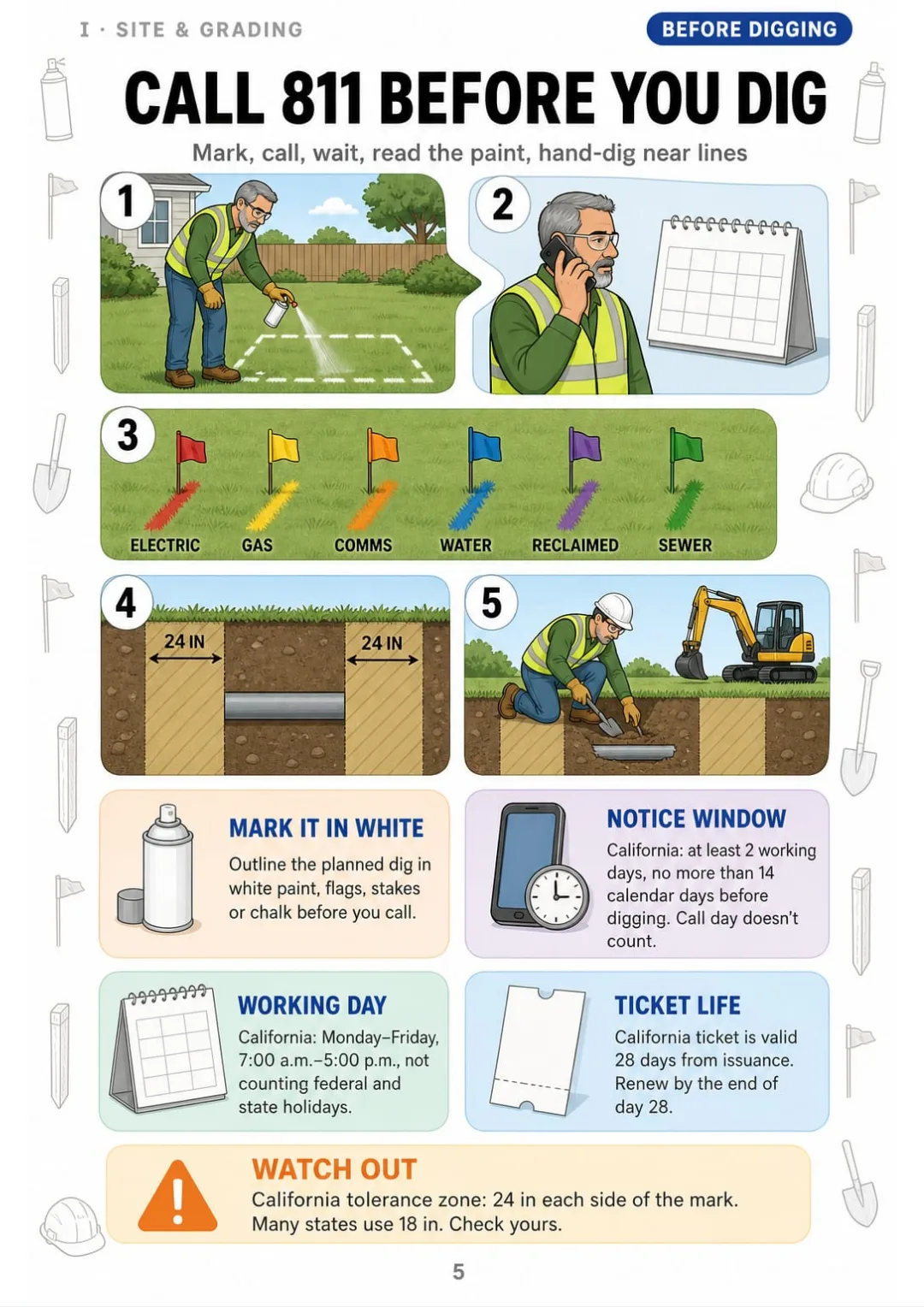
Call 811: 2 working days notice, 28-day ticket, hand-dig within 24 in (California)
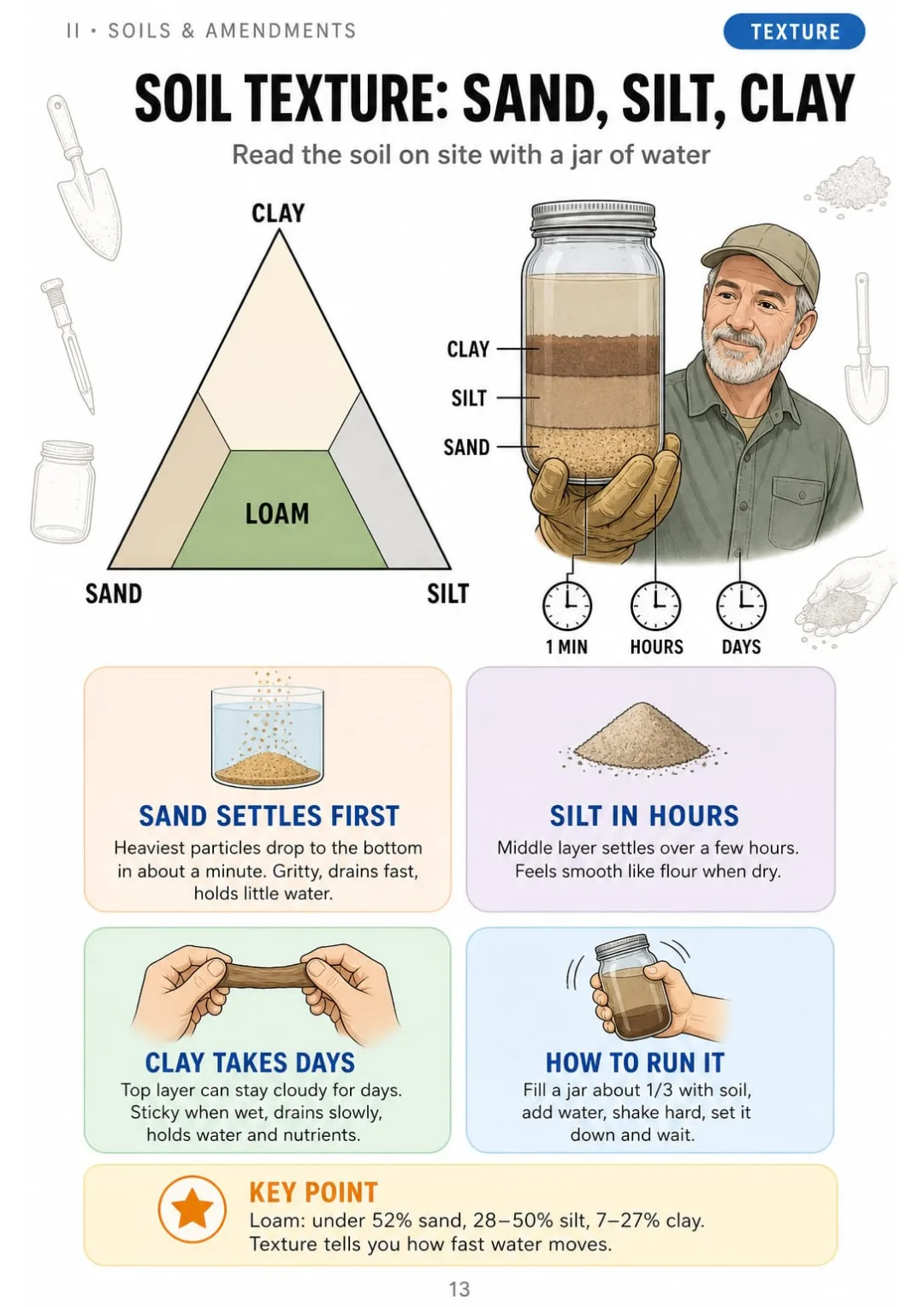
Jar test: sand settles in a minute, silt in hours, clay in days.
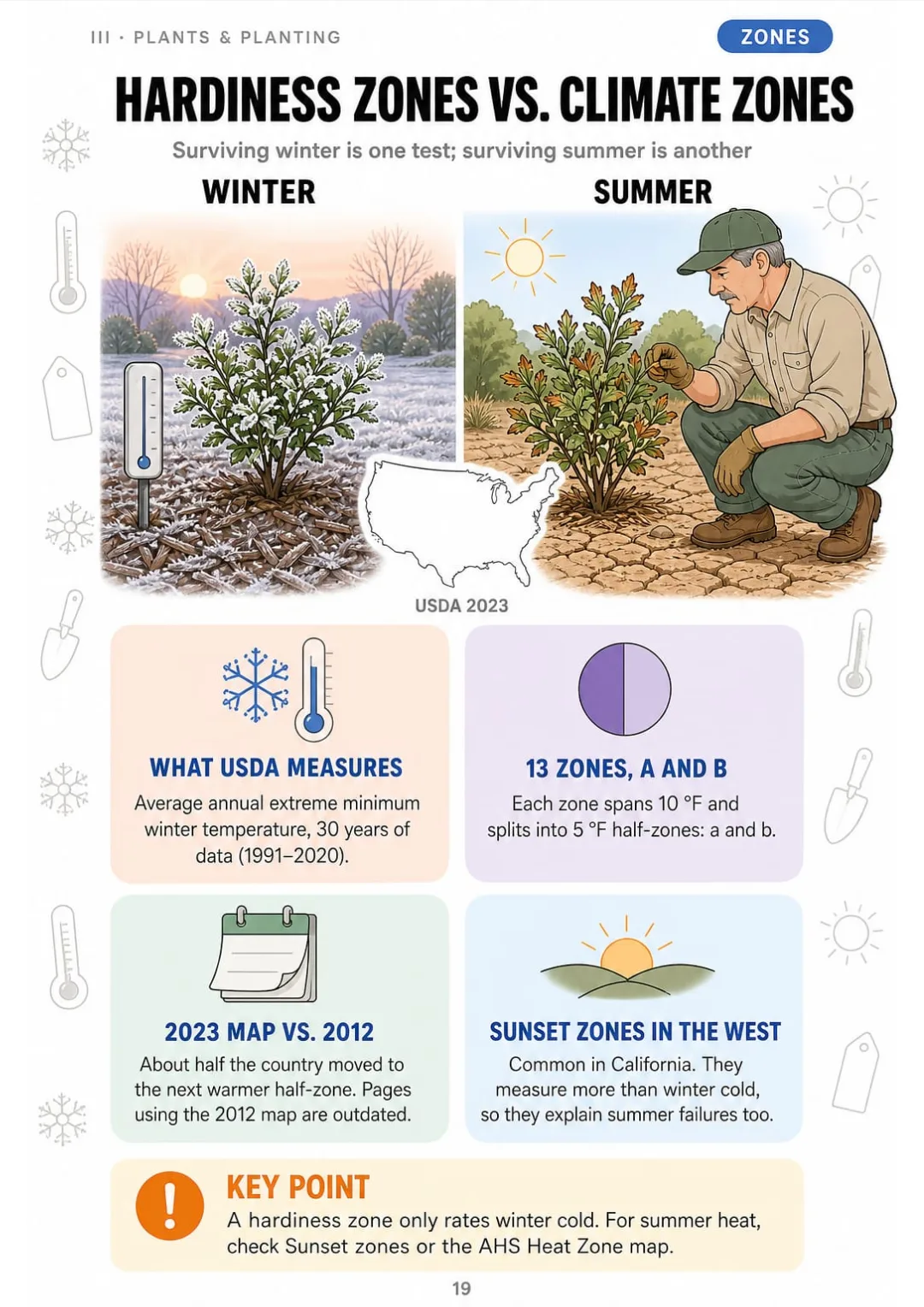
USDA 2023 map: 13 zones, 10 °F each, split into 5 °F a/b halves.
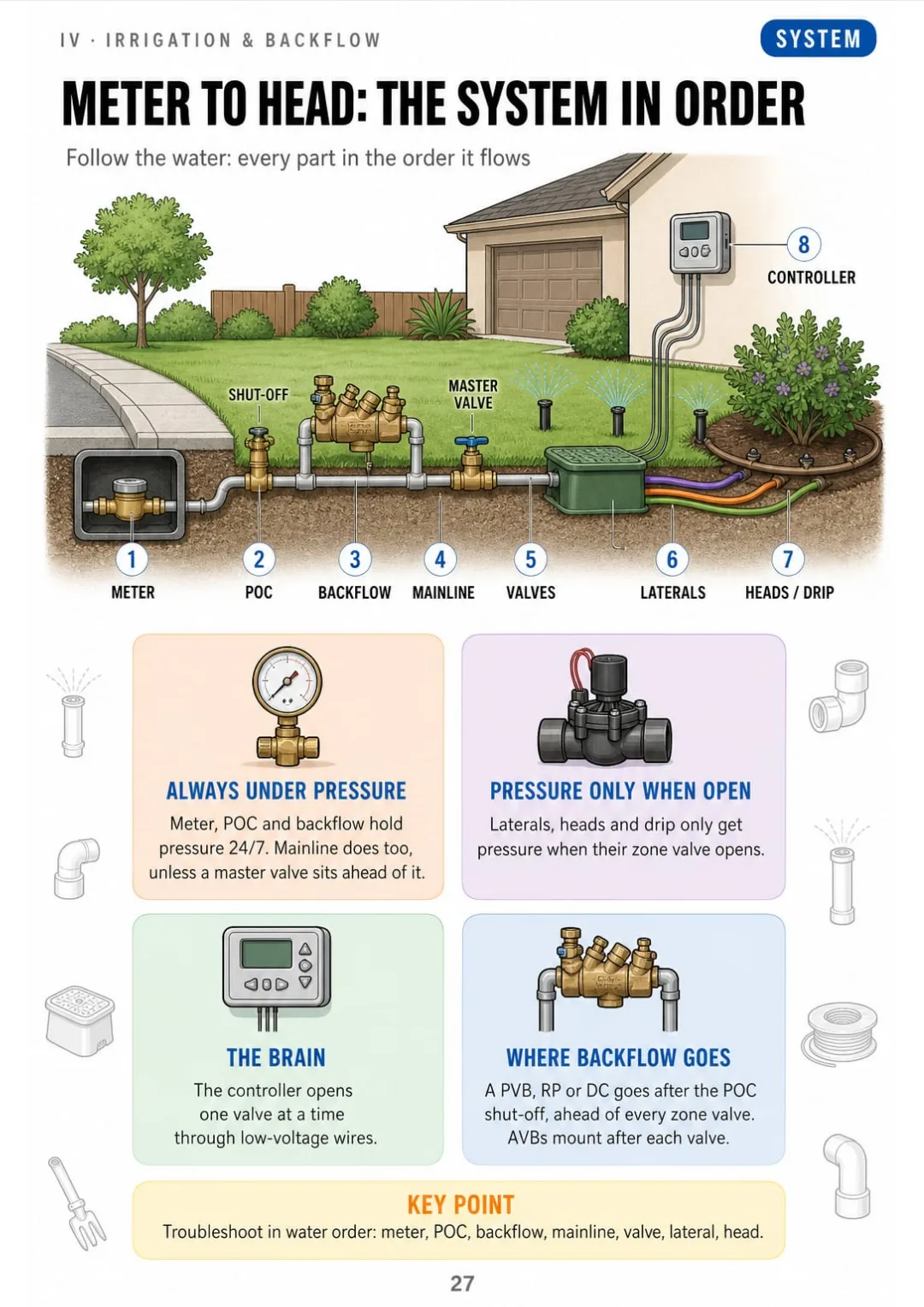
8 parts, one path: meter → POC → backflow → mainline → valves → laterals → heads, run by the controller
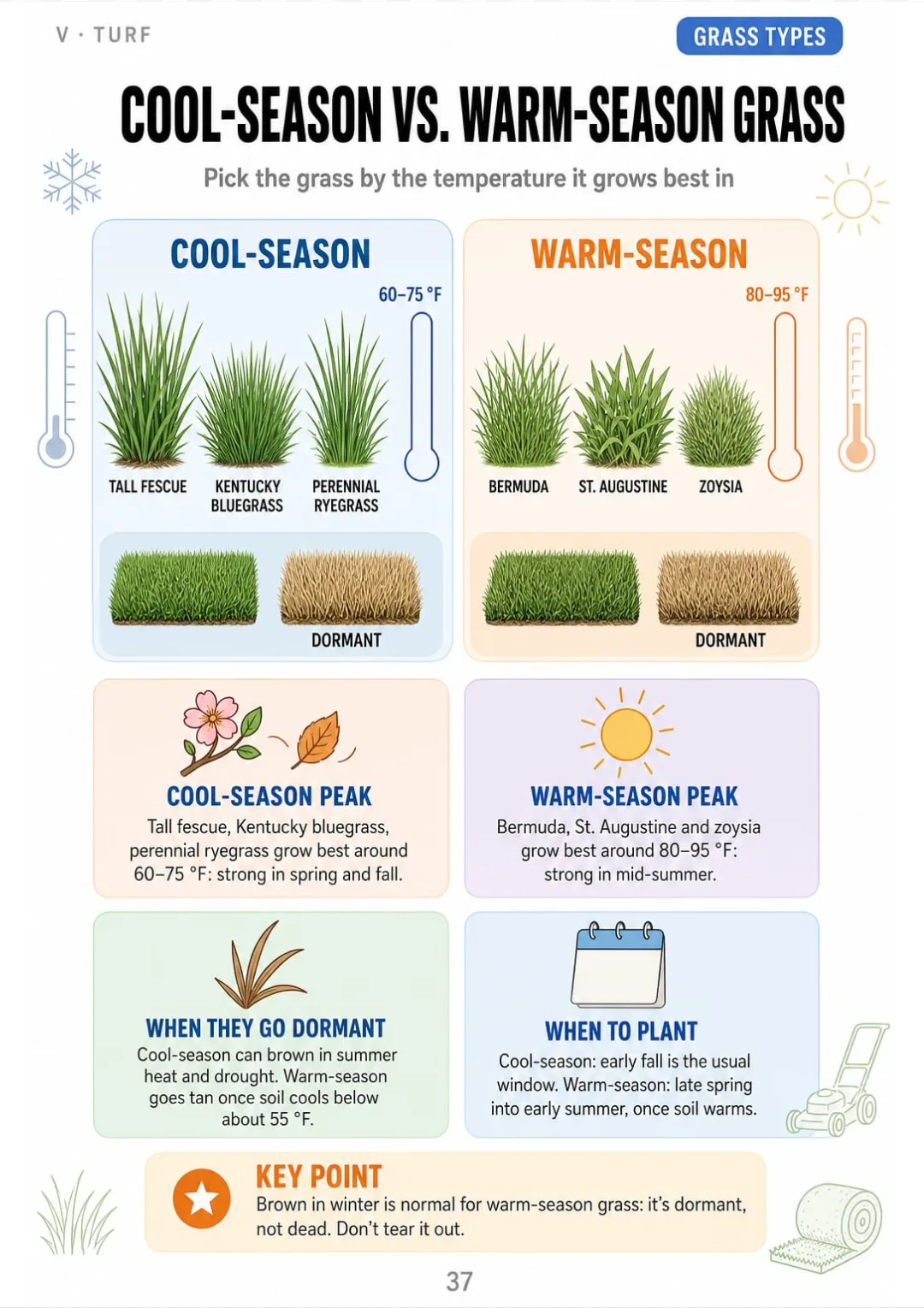
Cool-season 60–75 °F, warm-season 80–95 °F, and when each one goes dormant
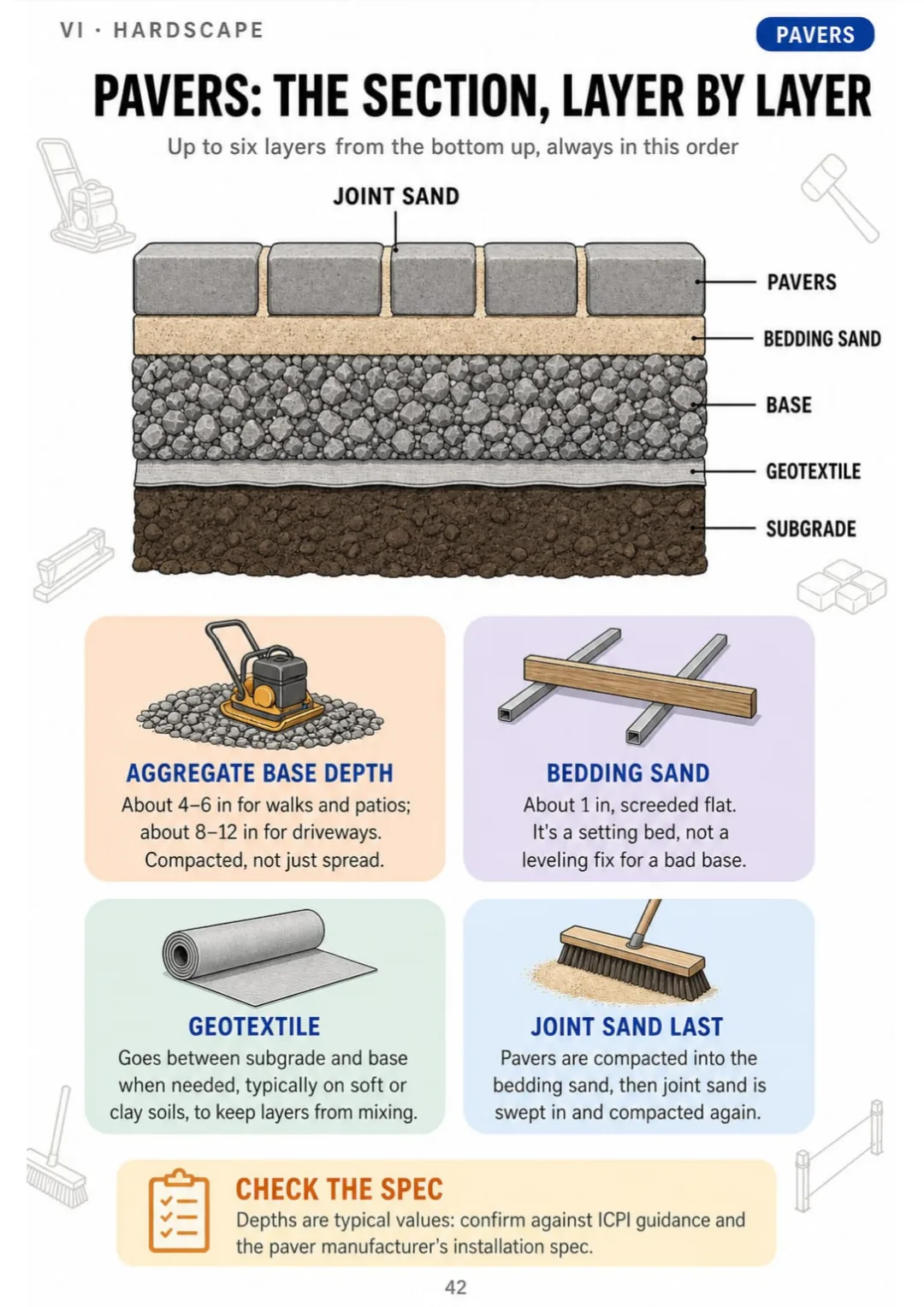
Subgrade, geotextile, 4–6 in base (8–12 in driveways), 1 in sand, pavers, joint sand.
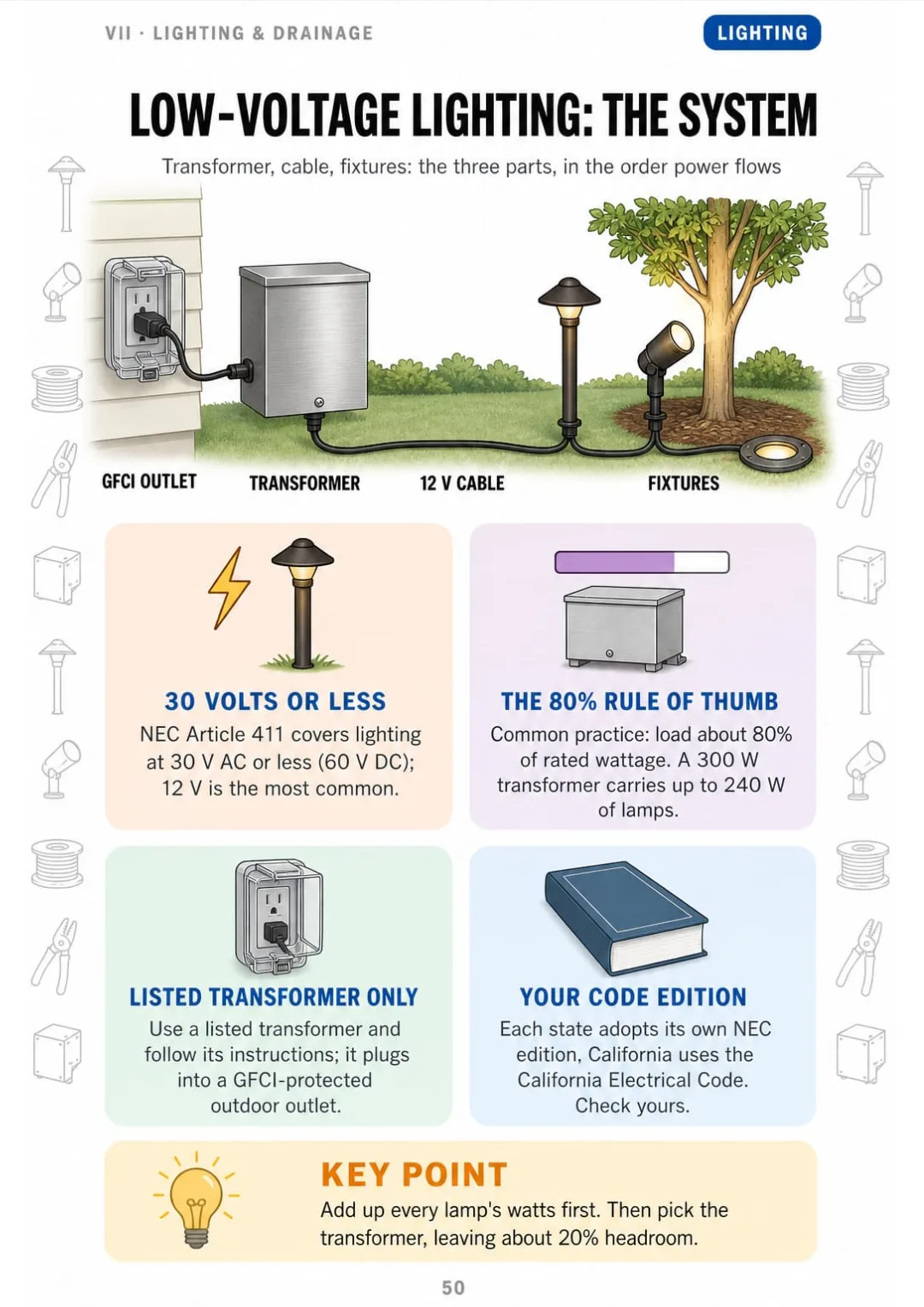
120 V in, 12 V out: a 300 W transformer carries up to about 240 W of lamps
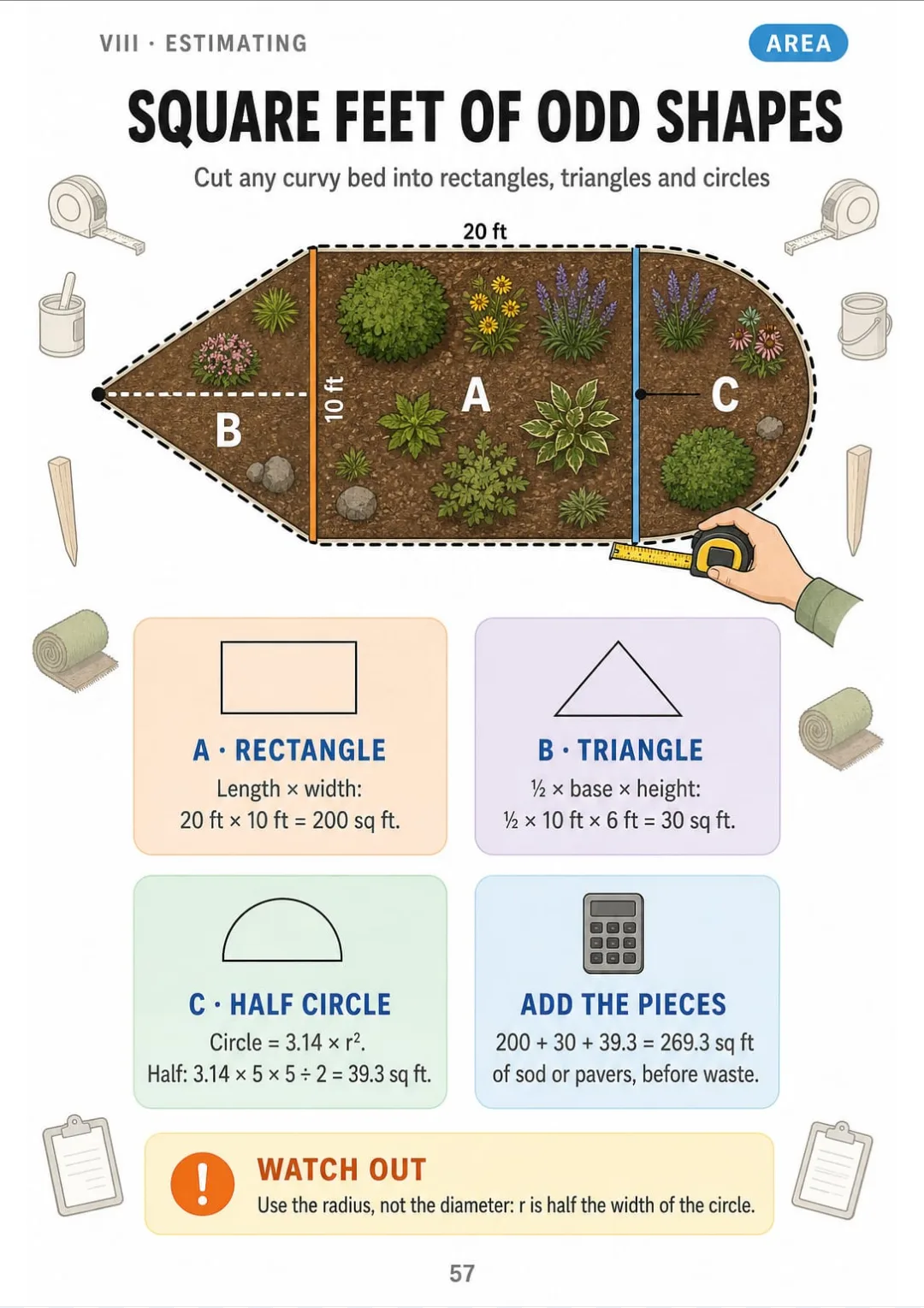
Rectangle 200 + triangle 30 + half circle 39.3 = 269.3 sq ft

Swipe to see more →

These are real pages from the book. The table of contents is the full one: 9 parts and 62 topics.

The Problem Isn't You. It's How It Was Explained to You.

You're in a client's backyard holding a plant tag that says Zone 9, and the client asks you: will this make it here?

You read about it last week. The handbook gives you two pages of paragraphs on average extreme minimum temperatures, map updates and local climate. By the next morning, none of it is left.

USDA 2023 map: 13 zones, 10 °F each, split into 5 °F a/b halves.

In the book it's one page: the USDA 2023 map drawn with its 13 zones, 10 °F per zone, split into 5 °F a and b halves, and right beside it, how a climate zone is different.

The backflow preventer, the paver base, slope in percent, cubic yards of mulch, the 811 call: each one has its own page too.

You look at the tag, you know the answer, and you tell the client without going back to the handbook.

COMPARE FOR YOURSELF

The Same Topic, Two Ways to Study It

THIS
  • The handbook: line after line
  • Sand, silt and clay explained only in words
  • You walk into the exam second-guessing yourself
Soil texture describes the relative proportion of sand (0.05–2.0 mm), silt (0.002–0.05 mm) and clay (below 0.002 mm) particles, classified according to the USDA textural triangle. Texture governs infiltration rate, water-holding capacity, aeration and cation exchange capacity. Coarse-textured soils drain rapidly and retain few nutrients, whereas fine-textured soils retain moisture but are prone to compaction and slow percolation. In the field, texture may be estimated by sedimentation, in which particles settle out of suspension at rates proportional to their diameter.
FOR THIS
  • Sand, silt and clay in one drawing
  • The settling times in a box
  • You see it and you get it
Jar test: sand settles in a minute, silt in hours, clay in days.
CONTENTS

Take a Look at the 9 Parts and 62 Topics

Site and grading, soils, plants, irrigation and backflow, turf, hardscape, lighting and erosion, estimating, and a final exam review: 66 pages, all illustrated

ISite, Layout & Grading · pp. 5-12
  1. Call 811 Before You Dig
  2. Reading a Landscape Plan
  3. Laying Out the Job: Stakes, String and the 3-4-5 Triangle
  4. Slope in Percent, Ratio and Degrees
  5. Grading Away from the Foundation
  6. Cut, Fill and Compaction
  7. Shooting Grades with a Laser or Builder's Level
  8. Surface Drainage: Swales, Area Drains and Downspouts
IISoils & Amendments · pp. 13-18
  1. Soil Texture: Sand, Silt and Clay
  2. Drainage and the Percolation Test
  3. Soil pH and What It Locks Out
  4. Fertilizer Labels: Reading N-P-K
  5. Amendments vs. Mulch
  6. Compaction and Soil Prep for Planting
IIIPlants & Planting · pp. 19-26
  1. Hardiness and Climate Zones
  2. Right Plant, Right Place: Sun, Water and Size at Maturity
  3. Hydrozones: Grouping Plants by Water Need
  4. Planting a Tree Step by Step
  5. Container, Balled & Burlapped and Bare Root
  6. Staking a New Tree the Right Way
  7. Mulch Depth and the Mulch Volcano
  8. Pruning Cuts: The Branch Collar and Why Not to Top
IVIrrigation & Backflow · pp. 27-36
  1. From the Meter to the Head: The System in Order
  2. Pressure and Flow: PSI, GPM and Elevation
  3. Backflow: Why Irrigation Needs Protection
  4. The Four Backflow Devices Side by Side
  5. Pipe: Mainline vs. Lateral
  6. Valves and Wiring
  7. Head-to-Head Coverage
  8. Sprays, Rotors and Matched Precipitation
  9. Drip Irrigation: Filter, Regulator, Emitters
  10. Controllers, Run Times and Smart Watering
VTurf · pp. 37-41
  1. Cool-Season vs. Warm-Season Grass
  2. Seed vs. Sod vs. Hydroseed
  3. Installing Sod Step by Step
  4. Mowing Height and the One-Third Rule
  5. Aeration, Thatch and Watering Turf
VIHardscape · pp. 42-49
  1. Pavers: The Section, Layer by Layer
  2. Paver Slope and Edge Restraint
  3. Segmental Retaining Walls
  4. When a Wall Needs Engineering
  5. Concrete Flatwork Basics
  6. Flagstone and Gravel Paths
  7. Fences, Decks and Overhead Structures: The Basics
  8. Water Features and Pond Basics
VIILighting, Drainage & Erosion · pp. 50-56
  1. Low-Voltage Lighting: The System
  2. Voltage Drop and Wire Gauge
  3. Lighting Techniques
  4. Subsurface Drainage: French Drains
  5. Erosion Control on Slopes
  6. Sediment Control and Stormwater Rules
  7. Safety on the Job: Trenches, Equipment and Chemicals
VIIIEstimating & the Business Basics · pp. 57-62
  1. Square Feet of Odd Shapes
  2. Cubic Yards: The One Formula
  3. Mulch, Soil, Gravel and Base Takeoffs
  4. Concrete, Pavers and Wall Block
  5. Plant Counts on Triangular Spacing
  6. Contracts, Permits and Liens: The Basics
IXExam Review · pp. 63-66
  1. The Numbers Page
  2. Formulas You'll Use on the Exam
  3. Things That Get Mixed Up
  4. Exam-Week Checklist

One Page, One Topic, All Clear

Think of it this way:

A homeowner wants a price on a bed that's part rectangle, part triangle, part curve. Or the exam hands you the same shape. You need the square feet, and you need them right.

In the book you open the page on odd shapes: the yard split into a rectangle, a triangle and a half circle, each with its area, added up to 269.3 sq ft.

Cool-season 60–75 °F, warm-season 80–95 °F, and when each one goes dormant

Same with the backflow preventer, the paver section, the low-voltage transformer, the 811 ticket and warm-season grass: each one on its own page.

Landscaping Contractor Illustrated is 9 parts and 62 topics, all drawn, and it ends with the numbers page, the formulas and an exam-week checklist.

What you see drawn, you don't have to memorize.

What's Inside Landscaping Contractor Illustrated:

Ipp. 5-12

Site, Layout & Grading

Calling 811, reading a plan, the 3-4-5 layout, slope in percent, ratio and degrees, grading away from the foundation, cut and fill, shooting grades and surface drainage.

IIpp. 13-18

Soils & Amendments

Sand, silt and clay, the perc test, soil pH, reading N-P-K, amendments vs. mulch and soil prep for planting.

IIIpp. 19-26

Plants & Planting

Hardiness and climate zones, right plant in the right place, hydrozones, planting and staking a tree, root-ball types, mulch depth and correct pruning cuts.

IVpp. 27-36

Irrigation & Backflow

The system from meter to head, PSI and GPM, backflow and the four devices, mainline and laterals, valves and wiring, head-to-head coverage, sprays and rotors, drip and controllers.

Vpp. 37-41

Turf

Cool- and warm-season grasses, seed, sod or hydroseed, laying sod, the one-third mowing rule, aeration and thatch.

VIpp. 42-49

Hardscape

The paver section layer by layer, slope and edge restraint, segmental walls and when they need an engineer, flatwork, flagstone and gravel, fences, decks and water features.

VIIpp. 50-56

Lighting, Drainage & Erosion

Low-voltage lighting, voltage drop and wire gauge, lighting techniques, French drains, erosion and sediment control, and safety in trenches and around equipment.

VIIIpp. 57-62

Estimating & the Business Basics

Square feet of odd shapes, the cubic-yard formula, mulch, soil, gravel and base takeoffs, concrete, pavers and block, triangular spacing, and contracts, permits and liens.

IXpp. 63-66

Exam Review

The numbers page, the formulas, the things that get mixed up and an exam-week checklist.

At the end of the book: A numbers page, the exam formulas, the things that get mixed up and an exam-week checklist.

Plus: 2 Free Books

Landscaping Exam Practice Questions

BONUS 1: «Landscaping Exam Practice Questions»

Value on its own: US$ 17.90

Test yourself with exam-style questions on every chapter, each with the answer and the page that explains it, so you know what to review again.

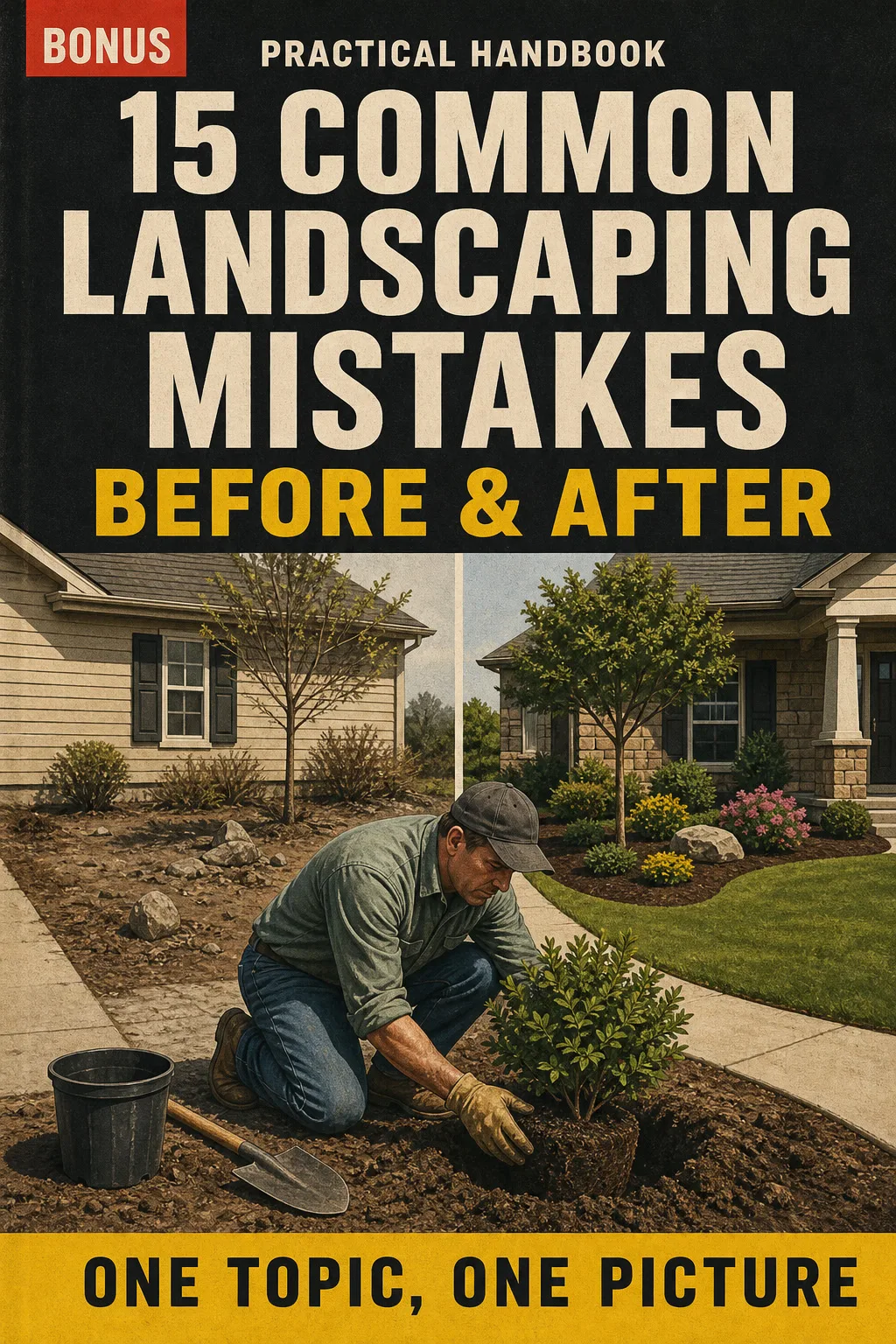
15 Common Landscaping Mistakes: Before & After

BONUS 2: «15 Common Landscaping Mistakes: Before & After»

Value on its own: US$ 14.90

See the 15 most common job-site mistakes drawn side by side with the right way, from slopes that send water to the foundation to paver bases that sink.

Landscaping Contractor Illustrated with 2 Free Books

  • Landscaping Contractor Illustrated: 66 illustrated pagesUS$ 63
  • BONUS 1: Landscaping Exam Practice QuestionsUS$ 17.90
  • BONUS 2: 15 Common Landscaping Mistakes: Before & AfterUS$ 14.90
  • High-resolution PDF to printIncluded
Total value US$ 95.80
YOUR PRICE:
US$ 27
You save US$ 68.80
YES, I WANT LANDSCAPING CONTRACTOR ILLUSTRATED FOR US$ 27

📄 This is a digital PDF book sent to your email: nothing is printed or shipped.

Secure purchaseEncrypted payment30-day guarantee

PDF by email: We email you Landscaping Contractor Illustrated as a PDF, together with the two free books. It's a single payment: no installments, no extra charges.

Who This Book Is For

You're studying for the license

You're studying for the license

You review the trade in the order you build a job, one page per topic, after work or on the weekend.

Your exam date is set

Your exam date is set

The numbers page, the formulas and the things that get mixed up, all in one place for the last review.

You already run your own crew

You already run your own crew

Print it and keep it in the truck: the slope, the paver base or the material math, ready when a client or inspector asks.

Everything You Get Today

US$ 95.80US$ 27
YES, I WANT LANDSCAPING CONTRACTOR ILLUSTRATED FOR US$ 27

📄 This is a digital PDF book sent to your email: nothing is printed or shipped.

30DAYS
GUARANTEE

30-Day Guarantee

Try Landscaping Contractor Illustrated for 30 days, bonus books included.

We refund everything if the file won't open, if the book isn't what you see here, if you were charged twice or if the email doesn't arrive. Just email us.

You pay once. No subscriptions.

Frequently Asked Questions

Is it for me if I've done landscaping for years and now want my contractor license?

Yes. It's built for people who already do the work and need to review it for the exam, not for beginners. It follows the California C-27 study guide. The trade itself (grading, soils, irrigation, pavers, lighting, estimating) works the same in every state. The values that change by state, like 811 notice and the hand-dig zone, water-use rules or the wall height that needs an engineer, are flagged on the page so you can check them against your own board's handbook.

Where does the content come from?

From the CSLB C-27 study guide and the codes it points to: the IRC, California's MWELO, California 811, OSHA 29 CFR 1926 Subpart P and the EPA Construction General Permit.

Is this official material?

No. It's independent study material. It isn't published or endorsed by the CSLB or any state licensing board, and it doesn't come with a certificate or count toward your license: the license comes from your state's exam.

Does it replace a prep course or the Law & Business study?

No. It covers the trade side and only the basics of contracts, permits and liens. Study Law & Business separately and use your board's official handbook.

Are the practice questions the ones on the exam?

No. They're written for this book, in exam style, each with the answer and the page that explains it.

When and how do I get it?

The book and the 2 bonus books arrive as a PDF by email, to the address you enter at checkout.

Do I have to pay every month?

No. It's a one-time payment.

Can I have it on paper?

Yes. The PDF is ready to print, so you can keep a copy in the truck.

How does the refund work?

You have 30 days. We refund everything if the file won't open, if the book isn't what you see on this page, if you were charged twice or if the email doesn't arrive: just email us.

Before You Close This Page

No more rereading the handbook with nothing sticking.

The backflow preventer, the paver base, the slope: you see them drawn, and it clicks.

You walk into the exam knowing where everything is.

Drawings make studying faster.

The book is right below.

One-time payment: US$ 27 · Guarantee: 30 days · PDF by email

YES, I WANT LANDSCAPING CONTRACTOR ILLUSTRATED FOR US$ 27

📄 This is a digital PDF book sent to your email: nothing is printed or shipped.